

AI-first design is a culture shift, not a tooling upgrade
When making gets easier, judgement becomes the advantage.

There is a lot of noise around AI right now.
Prompting. Vibe coding. Weekend projects. A few prompts and suddenly everyone is an expert.
That is not what this is about.
What interests me is something far less theatrical and far more consequential: how AI fundamentally changes the way product organisations learn. Over the past 6 months, we have invested deeply in AI-first design workflows, not as a side experiment or a hackathon, but as a serious shift in how we build.
The results have been tangible. We have significantly reduced the time to go from idea to validation. What previously took weeks now takes days, and traditional handoffs between design and engineering are starting to look a little different. Most importantly, we are getting through the build, measure, learn loop more often.
That frequency is where value compounds.
The Double Diamond is dead
The Double Diamond was built for a world where exploration was expensive: Diverge. Converge. Discover. Define. Develop. Deliver. It assumes that thinking and building are distinct phases, that fidelity comes late, and that iteration is costly.
AI fundamentally alters those economics. Exploration is cheaper, prototyping is faster, and validation can happen earlier and at higher fidelity. Divergence and convergence no longer sit neatly in sequence. They overlap. We are no longer moving through diamonds. We are moving through tight, compounding loops.

This is not just anecdotal. Board of Innovation’s Stingray model reframes the Double Diamond into something more fluid and adaptive, reflecting how AI collapses exploration and execution into overlapping movements rather than staged gates. Human8 has similarly written about how AI reshapes the model by reducing the cost of divergence and accelerating convergence. When ideation and prototyping can happen in hours rather than weeks, linear processes can become a bottleneck.
Inside our own work, the shift is tangible. It is easier to explore multiple paths simultaneously, challenge assumptions in real time, and test extreme ideas without organisational drag.
The creative process has not become more constrained. If anything, it has expanded. The constraint is no longer production. The constraint is judgement.
What we actually changed
This was not a tooling upgrade. It was a workflow redesign.
But before introducing any new workflows, we baselined our AI maturity across the design organisation. We assessed confidence, capability, usage patterns, and where friction was emerging. That data shaped how we sequenced and governed the rollout. We were deliberate about how and where we use AI, recognising both its potential and its cost. Not everyone was ready for AI-assisted prototyping on day one. Some needed structured support around prompt thinking. Others were already experimenting and needed system-level guardrails.
We approached it in three tiers, designed to meet the team where they were and move them forward deliberately.
1. Prompt engineering as a thinking tool
The first shift was not generative UI. It was generative thinking.
We use AI to critique ideas, challenge assumptions, explore tangential directions, draft research guides and screeners, accelerate synthesis, and create interactive customer archetypes that teams can interrogate from early ideation through to proposition validation.
It has become a thinking partner, not a decision-maker.
We still run human-in-the-loop validation. In a regulated environment, accuracy and compliance matter, and we do not trust outputs blindly. But the acceleration is undeniable. Our content designers are no longer spending most of their time on surface-level copywriting. They are focusing on content models, information architecture, and system-level voice design. AI handles the first pass. Humans raise the bar.
That is leverage.
2. Prototyping that feels real
We began experimenting with AI-powered prototyping through Figma Make, with mixed results at first. The breakthrough came when we stopped treating AI as magic and started integrating it properly into our design system.
We built structured templates, aligned components, and optimised tokens for generation. Designers can now create high-fidelity prototypes that match our brand, use real system components, and contain meaningful interaction in a fraction of the time it once took.
Because these prototypes look and behave like real product, the feedback we receive from customers is materially better.
We are no longer testing grey boxes. We are testing believable futures.
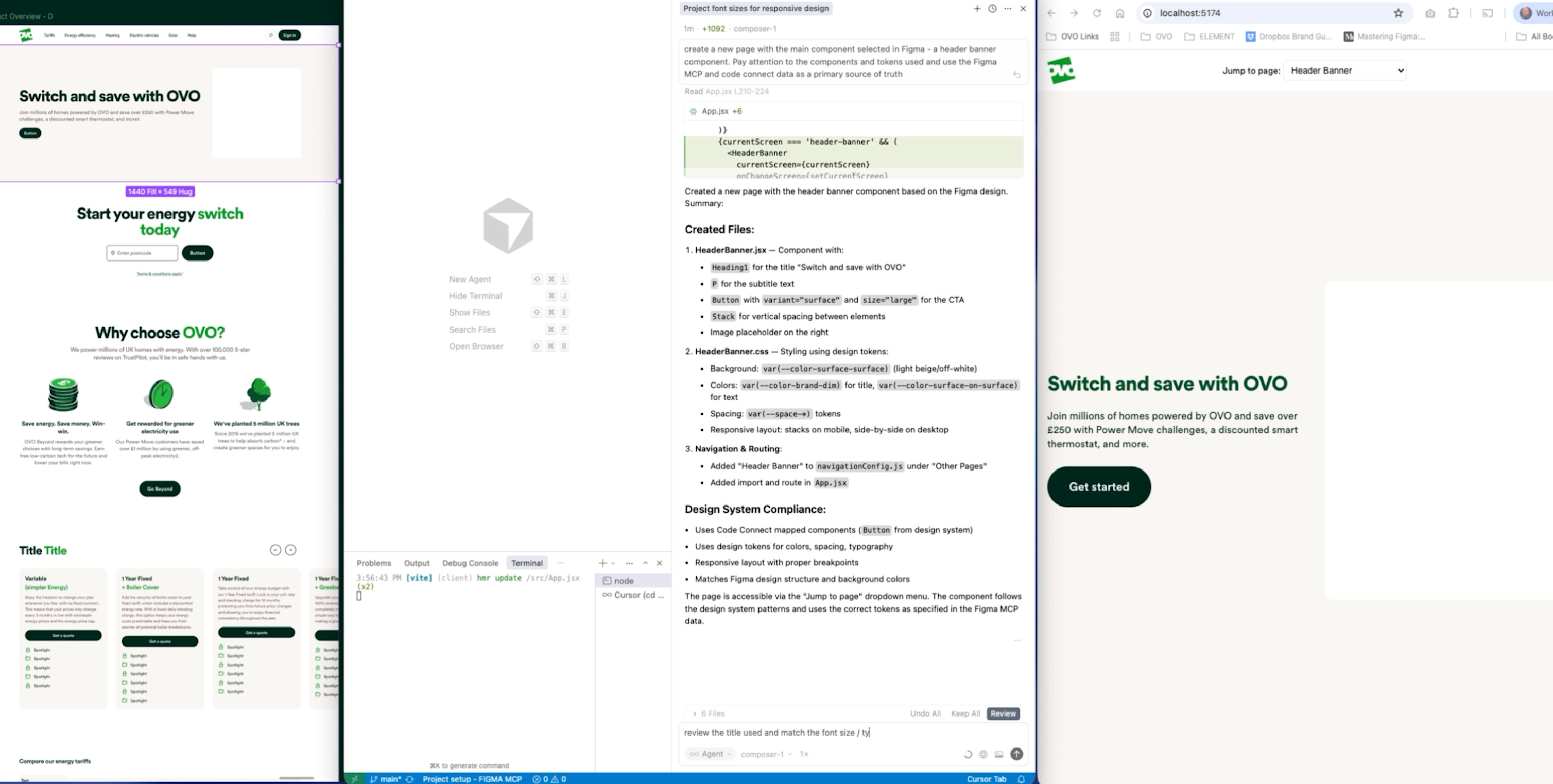
3. Design systems built for AI
The biggest shift has been structural. Our design system is no longer just a consistency layer—it’s a blueprint for intelligence. We’ve upgraded it to give AI the agency to build with us, using our standards as its guide. It’s a massive power-up that turns our foundations into a launchpad.
By connecting Figma to code through structured components, tokens, and shared standards, we are reducing traditional design to engineering handoffs. Prototypes are increasingly built on the same foundations as production. We can generate light and dark themes instantly, propagate system-wide changes quickly, and expose components and patterns in ways that agentic coding systems can interpret accurately.
This is not about one tool. It is about building systems that AI can understand and operate within.
When that alignment happens, throughput accelerates across the entire product team.
But don’t just take our word for it, hear how some of our team are using AI day-to-day…
A real example: unifying advisor tools
One of the clearest applications has been in our advisor experience.
Our advisors juggle dozens of tools. Tabs everywhere. Disconnected systems. We are exploring what it would take to unify those systems into a single interface.
In a pre-AI workflow, validating something this ambitious would have taken months just to prototype credibly. Instead, we are rapidly exploring architectural concepts, testing interaction patterns, and simulating integrated workflows in high fidelity.
The question is no longer whether we can build a believable prototype. It is whether this is the right idea.
That distinction matters.
The real fear, and why this is cultural work
Let’s address the anxiety directly.
Yes, AI is changing roles. Some traditional UX generalist profiles are struggling. Bootcamp pathways that once worked are no longer sufficient.
That is not cruelty. It is reality.
Design has always adapted to tooling shifts, from Photoshop to Sketch to Figma. This was technical evolution. This is cultural evolution.
When anyone can generate an interface, the differentiator is no longer production, it is judgement.
One of the most common concerns I hear is that AI lowers the quality bar, flattening creativity and making everything look the same. In practice, we are seeing the opposite. When the cost of generating something drops, the volume of ideas increases. When volume increases, the need for discernment becomes sharper.
Not, “can you make it?”.
But, “should we?”.
Taste matters more than ever. Visual judgement matters more than ever. Systems thinking matters more than ever. Technical fluency matters more than ever.
We are seeing the rise of design engineers, conversation designers, and hybrid product technologists, roles that blend craft and code and operate across systems rather than just screens.
The fundamentals have not disappeared. Curiosity, deep problem exploration, critical thinking, and adaptability matter more, not less. But recognising this shift intellectually is easier than living it organisationally.
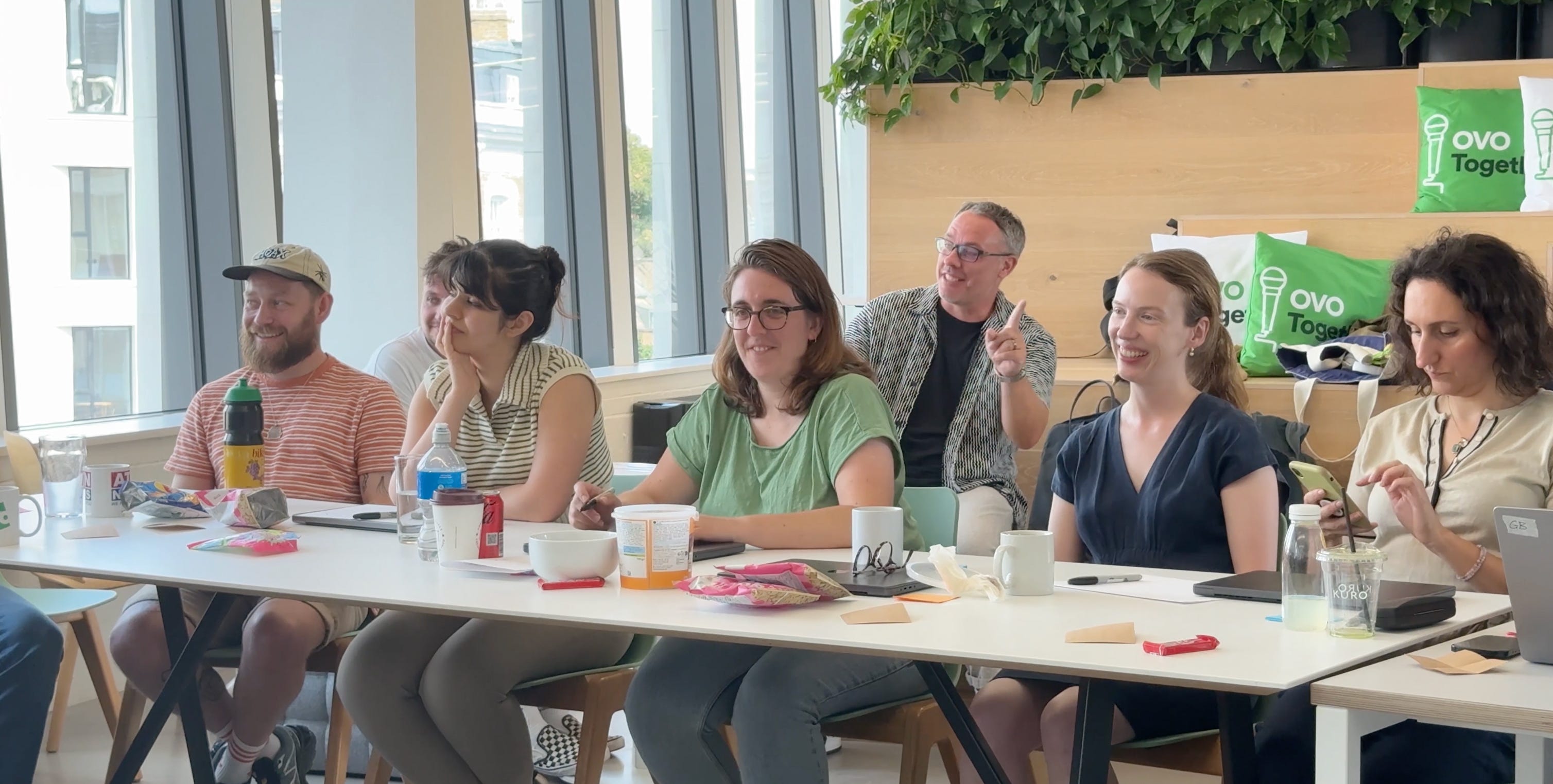
We are about halfway through the journey. We do not have it all figured out. There have been false starts, mixed experiments, and friction. That is what makes this work cultural, not technical.
The organisations that will win
If you are leading a product organisation today, this is not a question of whether to adopt AI. It is a question of whether your operating model is ready for it.
Are your design systems structured for generation?
Are your teams trained to critique AI outputs rather than accept them?
Are you measuring learning velocity, not just delivery velocity?
Are you hiring for judgement, not just execution?
The companies that win will not be those who build the fastest. They will be those who learn the fastest. AI, when integrated properly, is a learning accelerator. For design leadership, this is a defining moment. It demands curiosity over comfort. Systems thinking over surface polish. Judgement over output.
Anyone can have an idea. Few can recognise a good one.
That is the work.
What broke first when you started structuring your design system for generation? Every team I've talked to hits a wall where the AI technically uses the right components but still produces something that looks off almost like it knows the words but not the grammar. Did you run into that, and if so, how did you adjust?